
India's economy is projected to lose momentum in the second half of fiscal 2026-27, with tighter financial conditions, elevated energy prices, and broadening inflation pressures posing significant risks, according to DBS Bank economist Radhika Rao.

A Bain & Company report projects the global AI market must reach nearly USD 6 trillion annually by 2031 to sustain massive infrastructure investments. This growth will largely depend on new innovations beyond productivity gains, with a significant gap needing to be filled by emerging revenue streams like autonomous vehicles, physical AI, and new AI-driven products. The report also highlights the surge in hardware and semiconductor industries due to AI compute demand and the importance of AI absorption for Indian companies.

Formula One will return to Africa after 33 years, with Rwanda securing a 10-year deal to host a Grand Prix from the early 2030s, promising tourism, investment and jobs.
Industry leaders at MRAM Expo 2026 highlighted that India's maintenance economy has the potential to unlock a 1 per cent GDP opportunity. This growth can be achieved by addressing productivity losses from equipment breakdowns, unplanned downtime, and inefficient assets through smarter asset management practices. The NITI Aayog also supports AI-based predictive maintenance for resilient infrastructure, while the Indian Asset Performance Management market is projected for substantial growth by 2033.

The Indian corporate sector demonstrated strong credit quality in the first half of FY27, driven by robust balance sheets and healthy liquidity, despite facing risks from elevated crude prices, inflation, and global interest rates.

Foreign Portfolio Investors (FPIs) became net sellers in September, withdrawing Rs 35,860 crore from Indian equities due to global uncertainties, high US interest rates, and elevated crude oil prices, with outflows continuing into October.

After a significant 9.9% depreciation in FY26, the Indian rupee has shown comparative stability in the first half of FY27, depreciating by only 1.1%, attributed to regulatory interventions and measures to attract foreign capital, despite ongoing global pressures from rising crude oil prices and foreign investor outflows.

India's student housing shortage is widening, but high land costs, weak rental yields and regulatory hurdles are keeping organised developers away.

Finance Minister Nirmala Sitharaman stated that India is likely to sustain economic growth of 7 per cent or more in 2026-27, continuing the pace recorded since the Covid-19 pandemic, despite geopolitical uncertainties and supply-chain disruptions.
A report by IIT-Bombay professors recommends reducing the Merchant Discount Rate (MDR) on UPI transactions from 0.40 per cent to 0.08 per cent. It suggests that banks should fund the UPI ecosystem using their net interest margins from CASA deposits, rather than relying on MDR. The report also addresses transaction costs, credit card MDR, and ATM withdrawal allowances, aiming to ensure UPI's long-term sustainability and public trust by proposing remuneration only from large merchants.

Iranian President Masoud Pezeshkian arrived in New Delhi for the BRICS summit, where he is scheduled to hold bilateral talks with Prime Minister Narendra Modi to enhance trade and strengthen overall relations. His visit is particularly significant given the heightened tensions in West Asia and recent US economic sanctions against Iran. Pezeshkian highlighted BRICS' role in fostering economic resilience and reducing dependence on the US dollar, while the summit itself aims to address global challenges and bolster collective resilience in critical sectors.
Foreign institutional investors have withdrawn nearly $40 billion from Indian equities in the last two years and, according to Bernstein analysts, have 'little reason' to invest for the long-term, though they may 'return to trade'. The brokerage highlights challenges such as struggling large-caps, disruption from new technologies, and difficulties accessing small- and mid-caps (SMIDs) at an institutional scale.

The Delhi Half Marathon, a World Athletics Gold Label Race, has unveiled its Finisher's Medal for its 21st edition.

India's IT services industry is witnessing a surge in mergers and acquisitions, particularly among mid-cap companies, as AI-led pricing pressure and macroeconomic uncertainty compel firms to seek scale, capabilities, and broader market reach. This trend is exemplified by the recent merger of Happiest Minds Technologies and ITC Infotech, aiming to offer end-to-end solutions and compete for larger transformation programmes.

Rajasthan Governor Haribhau Bagde highlighted ethanol's potential to protect India from volatile petroleum markets and geopolitical risks, advocating for its widespread production and use. He, along with other officials, emphasised ethanol's role in strengthening the rural economy, ensuring timely cane payments, and combating carbon emissions, while also discussing its historical context and current government support.

The Central Board of Indirect Taxes and Customs (CBIC) is set to significantly increase its use of artificial intelligence (AI), machine learning (ML), and real-time analytics in Customs processes, aiming for a near-touchless, near-digital clearance experience, according to Chairman Vivek Chaturvedi.
Maharashtra Deputy Chief Minister Eknath Shinde concluded a two-day visit to the UK, focusing on attracting foreign direct investment and promoting the state's economic potential. His engagements included receiving leadership awards, meeting with sports figures like Virat Kohli to discuss Olympic aspirations, and appealing to British investors to bring technology and capital to Maharashtra, leveraging the India-UK FTA.

Indian stock markets experienced a significant downturn, with the Sensex plunging 1,124 points to a six-month low and the Nifty closing below 22,800, driven by surging crude oil prices, escalating geopolitical uncertainties, and weak global market trends.

Not a single retail outlet ran dry. Every household that wanted a cylinder got one. India faced neither a 1991 moment nor a 2013 one. Macroeconomic stability held. This was not an accident, and it was not luck alone. It was the work of a government that chose to act as it had during the pandemic -- deliberately and gradually, building one measure upon another rather than reaching for a single dramatic lever, explains V Anantha Nageswaran, chief economic advisor to the Government of India.

Given the current friction in ties, such a visit looks unlikely at this juncture.

Prime Minister Narendra Modi hosted Iranian President Masoud Pezeshkian in New Delhi for talks focusing on the West Asia situation, bilateral relations, and BRICS cooperation. The meeting, Pezeshkian's first visit to India as president, comes amidst heightened tensions in West Asia due to new US sanctions on Iran and concerns over global oil supplies from the Strait of Hormuz. Both leaders emphasised regional stability and economic resilience.
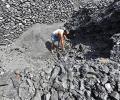
The Indian coal ministry announced that 147 commercial coal blocks auctioned since 2020 are expected to attract approximately 55,000 crore in capital investment, generate 490,000 jobs, and contribute significantly to state revenues.

For India, the goal is not simply to host another grand diplomatic gathering. It is to prove that a diverse coalition of emerging powers can still deliver.

The Indian government's proposal to extend the operating life of certain battery-electric, CNG, and hydrogen vehicles under national permits by five years could significantly improve their total cost of ownership (TCO) and residual values, according to industry experts.

Meesho, a value-commerce platform targeting middle- and lower-income geographies, is poised for significant growth driven by its asset-light model and low fulfilment costs, but faces intense competition from e-commerce giants and high valuations.

The FCNR (B) stratagem relies on using public money to defend the rupee. The State subsidises foreign borrowing to attract dollars. This tool requires large-scale borrowing to make a material difference against a gross external flow of $11 billion a day. A commensurately large fiscal cost falls upon the exchequer. The ministry of finance will choose how much it is willing to spend in exchange for this round number, points out Ajay Shah.

'You cannot stop these models from getting better. There is competitive and business pressure and if the US stops then maybe China will go ahead.'
BRICS leaders, in their New Delhi Declaration 2026, have called for wider access to Artificial Intelligence resources and stronger international cooperation to ensure the technology is safe, secure, inclusive, and reliable. The declaration outlines a broad technology agenda covering AI, cybersecurity, digital public infrastructure, telecom, quantum technologies, and advanced manufacturing, committing to implement the grouping's statement on 'Global Governance of Artificial Intelligence'.

An Indian sailor was killed and several others rescued during an anti-piracy operation in Somalia. Security forces retook control of the hijacked fuel tanker MT Honour 25, apprehending 16 suspected pirates. Other Indian seafarers from different vessels were also safely repatriated amidst a resurgence of piracy in the region.

'I don't really expect the August increase in food prices, which was close to 6 per cent, to persist as we go close to the end of this year.'

Experts laud the decision to impose a 0.4 per cent Merchant Discount Rate (MDR) on UPI transactions exceeding Rs 2,000, effective October 15. This move, along with a dedicated fund for small merchants, is seen as crucial for creating a sustainable digital payments ecosystem, incentivising expansion in rural areas, and funding innovation while keeping most transactions free for users.
West Bengal has launched an Emerging Quantum and Semiconductor Technologies (EQST) section at CSIR-CGCRI to attract investments and position the state as a hub for next-generation technology. Minister Kalyan Chakraborti highlighted India's need to invest in these crucial sectors and outlined the state's plans to collaborate with institutions and leverage budget initiatives to foster research and start-ups.

'The way the government behaves, sometimes I ask myself: Are not Tamils Sri Lankans too? Why do you discriminate so much?'

There are only bad and worse options before him, points out Aakar Patel.

India is hosting the BRICS summit, leveraging the platform to address global trade tensions and champion the developmental priorities of the Global South, including food, energy, and supply chain security. The summit, attended by leaders like President Xi Jinping and Vladimir Putin, will focus on resilience, innovation, cooperation, and sustainability, with India aiming to strengthen intra-BRICS collaboration and discuss global matters. The expanded BRICS grouping represents a significant portion of the world's population and GDP, making its discussions crucial for global economic stability.

Former Chief Economic Adviser Krishnamurthy V Subramanian outlines India's strategy to become a USD 55 trillion economy by 2047. The plan hinges on leveraging its young demographic in AI, dominating sunrise sectors like space and defence tech, attracting FDI, and achieving sustained 8% GDP growth.

US President Donald Trump is expected to sign the Lindsey O. Graham Sanctioning Russia and Iran Act of 2026 later on Friday (local time). A White House official confirmed the development to ANI without revealing further details.

Trade and business associations across India are organising a 'No UPI Day' on October 2 to protest the upcoming 0.4 per cent merchant discount rate (MDR) on Unified Payments Interface (UPI) transactions exceeding 2,000, effective from October 15.

Foreign portfolio investors (FPIs) have injected Rs 30,919 crore into Indian equities in August, marking their second consecutive month of net buying. This follows a Rs 20,200 crore investment in July, indicating a potential reversal after four months of significant outflows, driven by improving corporate earnings, resilient economic activity, and a stable rupee.

The 18th BRICS Summit got underway in New Delhi with leaders of partner countries gathering in the capital to discuss the changing global economic and geopolitical landscape.
